
This model provides a conceptual representation of the phases involved in procurement activity. While entities may adopt variations of this model, the key phases and steps are generally consistent across the Commonwealth. The purpose of this model is to support understanding and guide best practice, rather than prescribe a single approach.
The lifecycle describes what officials need to do at each stage. How these steps are carried out depends on factors such as:
- the estimated value and complexity of the procurement
- the financial and non-financial benefits and risks
- the nature of the market.
More information on Commonwealth procurement is available on the Finance website.
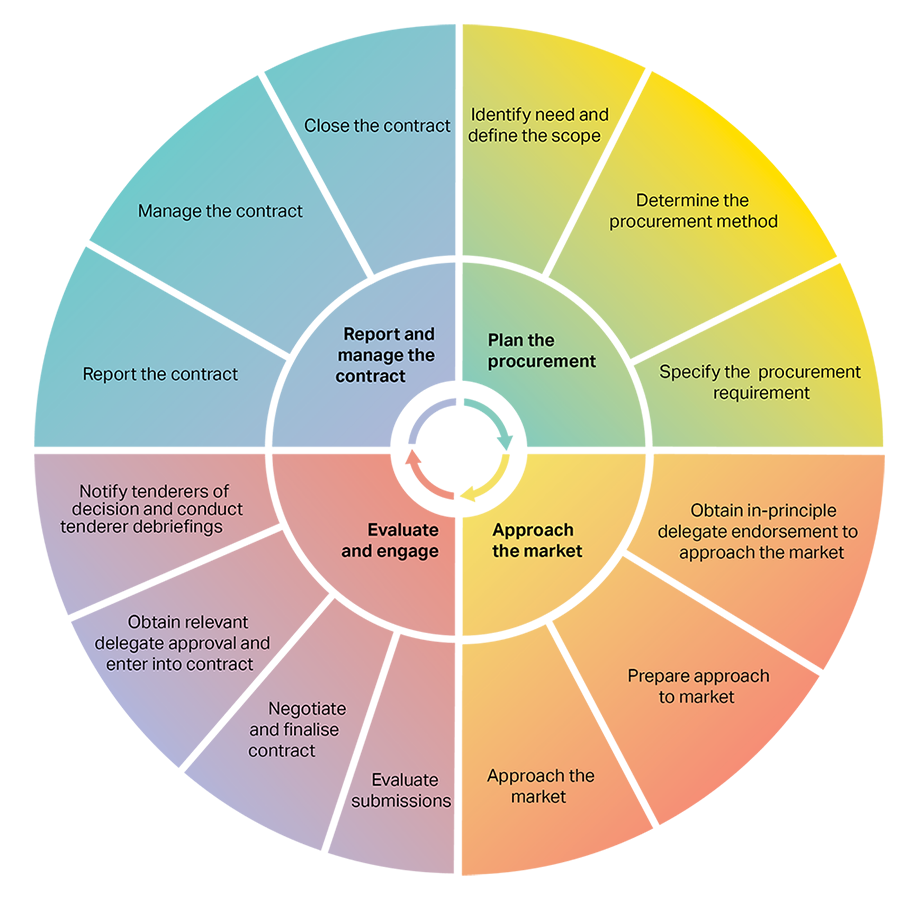
Phase 1 - Plan the procurement
Step 1. Identify need and define the scope
- Understand the procurement need, estimate whole-of-life costs, and confirm funding is available.
- Identify and engage stakeholders.
- Conduct market research.
- Identify risks and how to manage them.
- Check if procurement-connected policies apply.
Step 2. Determine the procurement method
- Check if a mandatory Whole of Australian Government arrangement is available for the goods/services you are procuring.
- Consider using an available cooperative panel, if your entity can participate.
- Identify if a condition for limited tender or Appendix A exemption applies as per the Commonwealth Procurement Rules.
- Decide if an open tender is the best approach.
- Identify potential suppliers. If using a panel or limited tender, approach enough suppliers to maximise competition (usually more than 1).
Step 3. Specify the procurement requirement
- Clearly describe the procurement specifications and requirements, based on the procurement need and your market research.
Phase 2 - Approach the market
Step 4. Obtain in-principal delegate endorsement to approach the market
- Get delegate approval of the procurement plan and other relevant documents (such as the tender evaluation plan, risk management plan, or probity plan).
Step 5. Prepare to approach the market
- Common documents include:
- Request for Quotation (RFQ): for panel or limited tender procurements.
- Request for Tender (RFT): for open tenders.
- Use panel templates if engaging a panel.
Step 6. Approach the market
- Allow enough time for potential tenderers to prepare a response. Open tenders must be open for at least 25 calendar days, except in specific circumstances.
- Include relevant evaluation criteria in the approach to market documentation.
Phase 3 - Evaluate and engage
Step 7. Evaluate responses
- The tender evaluation plan outlines the evaluation criteria and methodology for evaluating responses and is detailed in the approach to market documentation.
- All responses must be handled and evaluated fairly and consistently with the advertised evaluation plan.
Step 8. Negotiate and finalise the contract
- The evaluation team may seek clarification or conduct due-diligence activities before finalising the evaluation.
- Negotiate only if this was stated in the approach to market documentation, or if no single tenderer offers value for money.
- Ensure contract terms are agreed and documented, and all parties understand their obligations.
Step 9. Obtain delegate approval and enter into the contract
- The evaluation report should summarise the evaluation, any clarifications, and negotiated outcomes with the preferred tenderer(s).
- Each tender should be scored against technical requirements, with risks identified. The report should name the preferred tenderer and the final cost.
- Seek delegate approval to commit funds under the PGPA Act 23(3). Once approved, the contract can be signed under PGPA Act 23(1).
Step 10. Notify tenderers of decision and conduct tenderer debriefings
- Once the contract is executed, advise all tenderers of the outcome and offer a debrief. If requested, you must provide a debrief.
Phase 4 – Report and manage the contract
Step 11. Report the contract
- Contracts over $10,000 must be reported on AusTender within 42 days of execution.
Step 12. Manage the contract
- Manage the contract in line with the contract management plan.
- Check, process, and pay invoices on time.
Step 13. Close the contract
- Ensure goods and services were delivered on time and met expectations.
- Finalise and pay the last invoice.
- Communicate contract end to stakeholders.
- Assess the success of the procurement and document lessons learned.
- Store all records and documents appropriately.
Learning resources
Learning opportunities are available through the Commonwealth Procurement and Contract Management Training Suite.
Contact procurement.training@finance.gov.au for more information.
